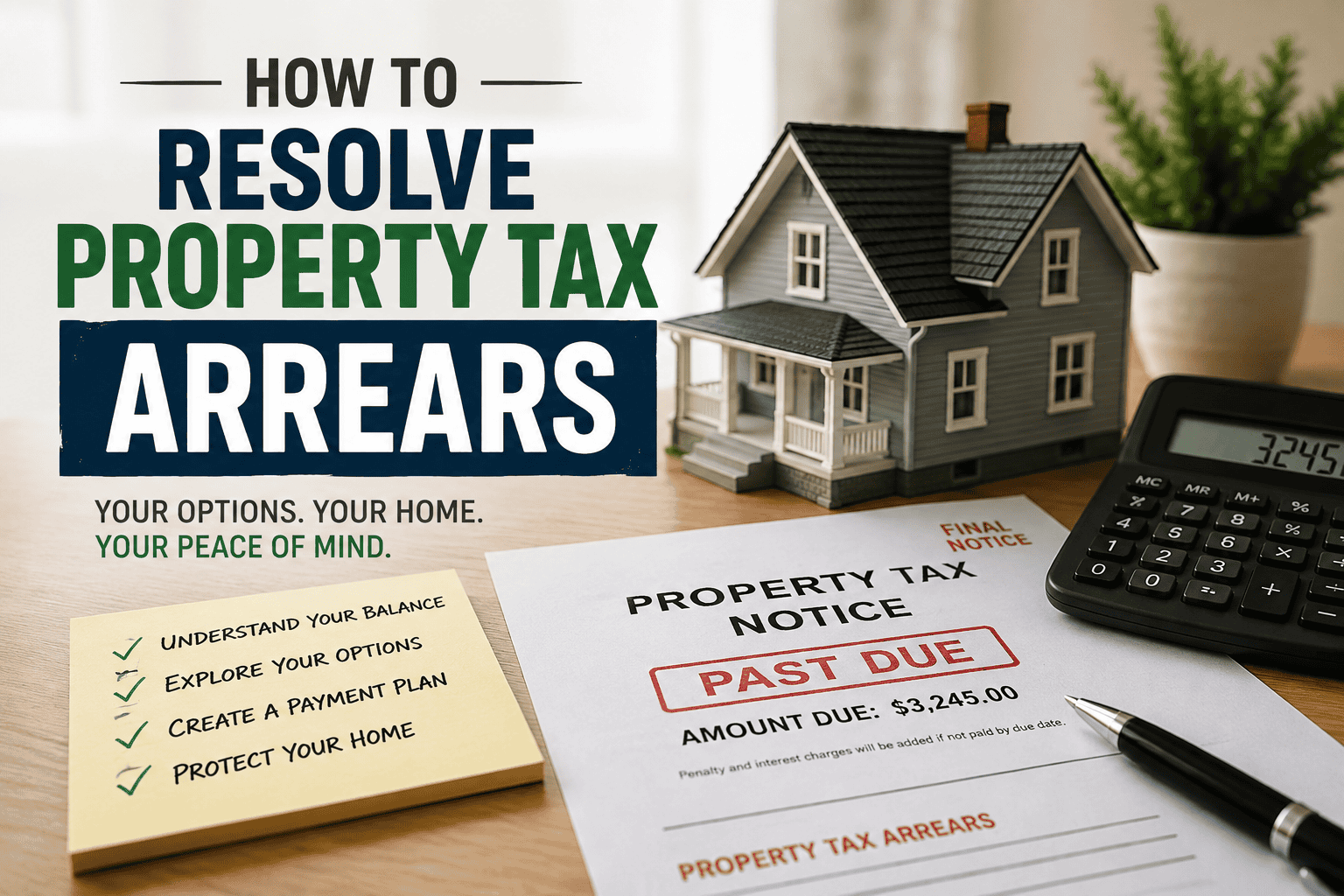
Falling behind on your property taxes is more common than most homeowners realize, and it is also more solvable than it feels in the moment. This guide explains what property tax arrears are, exactly what happens in Ontario if they go unpaid, and — most importantly — how to resolve property tax arrears before your municipality forces a tax sale.
If you own a home with equity in it, you almost certainly have options, including using that equity to clear the arrears before a tax sale begins. If you do not own property, the picture is different, and we will tell you that honestly rather than waste your time.
What Are Property Tax Arrears?
Property tax arrears are property taxes that have gone unpaid past their due date. Municipalities charge these taxes annually to fund local services, and crucially, the debt is secured against the property itself, not just against you personally. Interest and penalties are added monthly to the unpaid balance, and because the debt attaches to your home, it takes priority even over your mortgage.
That is what makes arrears more dangerous than they first appear. Unlike unsecured debt, property tax arrears sit ahead of nearly everything else registered against your home, which is why a municipality ultimately has the power to sell the property to recover them.
What Happens If You Don’t Pay Property Taxes in Ontario
In Ontario, the process a municipality uses to recover unpaid property taxes is a tax sale, governed by the Municipal Act. It moves slower than a mortgage power of sale, but the end result — losing your home — is just as real. Here is how it unfolds.
Interest and penalties accrue. From the moment taxes are overdue, interest and penalties are added every month, turning a manageable balance into a much larger one over time.
A tax arrears certificate is registered. Once taxes have been in arrears for roughly two years, the municipality can register a tax arrears certificate against the property title. This is the formal start of the tax sale process and a matter of public record.
The one-year redemption period. After the certificate is registered, you have approximately one year to pay the full amount owing — arrears, interest, penalties, and costs — to redeem the property and cancel the process. This is the window in which most solutions happen, and the reason acting early matters: the sooner you move, the more room you have to arrange financing to clear the arrears before the deadline closes.
The tax sale. If the redemption period passes without full payment, the municipality can sell the property, usually by public tender or auction. Proceeds cover the taxes, interest, and costs first; any surplus is returned to you, but a rushed public sale rarely reaches full market value, so homeowners routinely lose a large share of their equity.
The key point: a tax sale takes time to arrive, which means you almost always have a window to act. The homeowners who lose their properties are usually the ones who waited.
How to Resolve Property Tax Arrears
The right way to resolve property tax arrears depends on how far behind you are and how much equity you hold in your home. Here are the realistic routes, from simplest to most involved.
Pay Directly or Arrange a Payment Plan
If the arrears are small and recent, the simplest fix is to pay them off or contact your municipality about a payment arrangement. Many municipalities will work with homeowners who reach out before a tax arrears certificate is registered. Once the certificate exists, most require payment in full to redeem, and payment plans become far harder to negotiate.
Use Your Home Equity
For most homeowners who are seriously behind, the practical solution is to use the equity in their home. A home equity loan or a second mortgage can provide the funds to clear the arrears in a single payment, stopping the tax sale and removing the certificate from title. Because these are secured against the property, approval is based on your equity rather than your credit score — which matters, because tax arrears often come alongside credit difficulties.
This is exactly what our property tax arrears solutions are built for: homeowners with equity who need to clear a municipal debt quickly, before it escalates to a sale.
Refinance or Consolidate
If the arrears are part of a broader debt problem, it can make sense to address everything at once. Rolling the taxes together with high-interest debts through debt consolidation clears the arrears and reduces your overall monthly obligations at the same time. For more complex or time-sensitive files, private mortgage financing can move quickly enough to beat a redemption deadline.
Why Acting Early Is the Key to Resolving Property Tax Arrears
The single biggest factor in resolving property tax arrears well is time. Early on, before a certificate is registered, you have the widest range of choices and the lowest costs. As the process advances, interest compounds, options narrow, and eventually the municipality's timeline — not yours — takes over.
If you are behind on your property taxes and own a home with equity, the worst thing you can do is nothing. Find out what your options are while you still have all of them available.
Frequently Asked Questions About Property Tax Arrears
How do I resolve property tax arrears in Ontario?
The main routes are paying the balance or arranging a plan with your municipality before a tax arrears certificate is registered, using home equity through a home equity loan or second mortgage to clear the arrears in one payment, or consolidating the taxes with other debt. For homeowners with equity, using that equity is usually the fastest way to stop a tax sale, because approval is based on the property rather than your credit score.
How long can property taxes go unpaid before you lose your home in Ontario?
In Ontario, a municipality can register a tax arrears certificate after taxes have been in arrears for approximately two years, then proceed to a tax sale if the balance is not paid within roughly one year after that. In practice it can take around three years from the first missed taxes to a sale, though interest and penalties accrue the entire time.
Can I get a loan to pay off property tax arrears with bad credit?
Yes, in most cases, if you own a home with equity. The lenders we work with approve based on the equity in your property rather than your credit score, so tax arrears and the credit difficulties that often accompany them do not automatically disqualify you. Use our home equity calculator to estimate what you may qualify for.
What is a tax sale in Ontario?
A tax sale is the process a municipality uses to recover unpaid property taxes by selling the property, usually through public tender or auction, after a tax arrears certificate has been registered and the roughly one-year redemption period has passed. Any surplus after the taxes, interest, and costs is returned to the former owner.
Resolve Your Property Tax Arrears Before They Escalate
Property tax arrears are serious, but for a homeowner with equity they are one of the most solvable problems you can face — provided you act before the municipality's timeline runs out. To understand your options, see our property tax arrears solutions or get in touch, and we will give you an honest assessment of what is available.